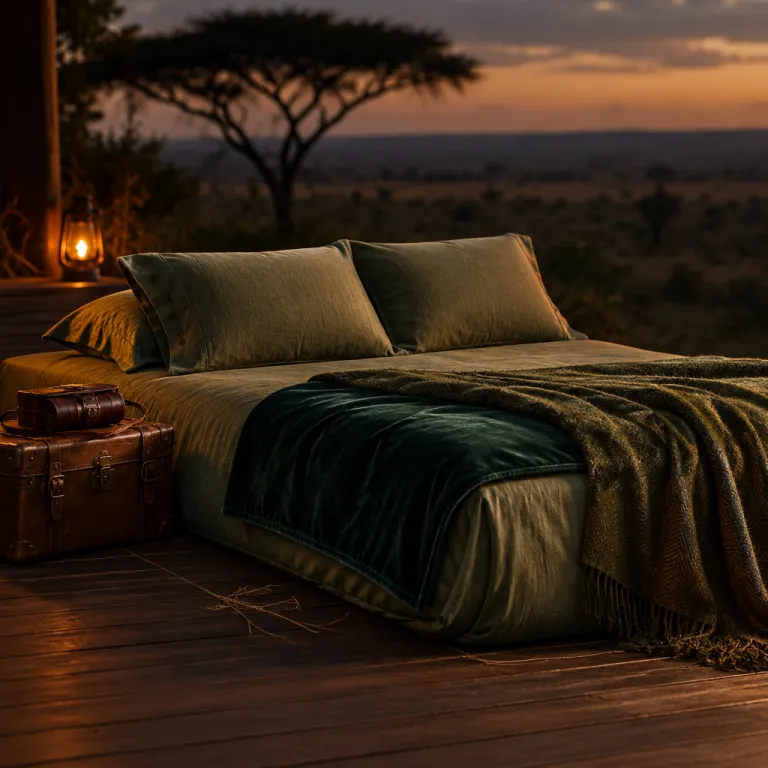
What a star bed sleep out safari really offers
A star bed sleep out safari is, at its core, disarmingly simple. A raised wooden platform stands alone in the African bush, usually several hundred metres from the main camp or lodge, with a proper bed dressed in high thread count linen and a mosquito net, a small seating area, and a secure bathroom nearby. There is no roof by design, only the night sky and the soft glow of lanterns, so you sleep under the stars while the sounds of the game reserve wrap around you.
On a well run luxury safari, the star bed is never an afterthought, because the best safari lodges in Africa engineer these sleep outs with the same care they give to their main suites. In Kenya, Tanzania and South Africa, teams position each private platform to overlook a waterhole or open plain, so you can watch elephant, giraffe or even lion move through the darkness while you lie in bed and feel the cool night air on your face. The result is an experience that feels both wildly exposed and quietly protected, a rare balance that many couples now rank as the single best night of their safari travel.
Think of it as the opposite of a conventional room, where walls and glass filter the bush into a view rather than a presence. On a star bed sleep out safari, the bush is the room, and the lodge simply provides a safe, elevated stage from which to inhabit it for one night. That is why guests who have already done multiple safaris, from the Okavango Delta to the Sabi Sands, increasingly ask for star beds or fly camping style sleep outs before they even choose a camp.
The sensory case: sound, sky and the deep bush reset
What makes a star bed sleep out safari so powerful is not only the view, but the way your senses recalibrate once the generator hum and lodge chatter fall away. Sound travels differently at night in the bush ; you hear hyena whoops from kilometres across the game reserve, the low contact calls of lion in the Sabi Sands, and the wingbeat of an owl passing close enough that you feel the air move. Lying in a proper bed on a private platform, you start to map the landscape through sound, guided quietly by what your ranger has explained about animal behaviour during earlier safari tours.
The night sky is the other protagonist, especially in remote corners of Kenya, Tanzania and South Africa where light pollution is almost nonexistent and the Milky Way feels like a physical river of stars. Many guests arrive from long haul travel via Cape Town or Victoria Falls, exhausted by airports and screens, and find that a single night of sleep under the stars resets their body clock more effectively than any spa treatment. You fall asleep to the rhythm of the bush, wake briefly when a distant elephant trumpets or a jackal barks, and by dawn your nervous system has synced to the slow, steady tempo of the wild.
This is why winter in the southern hemisphere, with its cold, clear nights, is often the best season for a star bed sleep out safari in southern Africa. Dry air sharpens the constellations above the national park or private concession, and predators are more active, which means more sound and more game movement around your platform. If you are planning a trip in the cooler months, read our guide to a southern African winter safari with exceptional predator sightings and then ask your chosen lodge how they adapt their star beds for crisp nights.
Safety, logistics and why one night is usually enough
For all its romance, a star bed sleep out safari is a tightly managed operation behind the scenes. Reputable safari lodges in Africa treat each sleep out as a separate mini camp, with radio contact to the main lodge, a trained guide or armed scout on call, and clear safety protocols about not leaving the platform at night. The structure itself is usually several metres off the ground, with secure stairs, solid railings and a layout that keeps you safely above any curious game moving through the area.
Weather is the other key variable, which is why most properties offer star beds as an optional highlight rather than a guaranteed feature every night of your stay. In the Okavango Delta, for example, high water or unexpected storms can make a remote platform inaccessible, while in parts of Tanzania or Kenya the long rains simply make sleep outs impractical for several weeks. Even in reliably dry regions such as the Sabi Sands or the private reserves bordering Kruger National Park in South Africa, strong winds or extreme cold can lead a lodge to recommend that you sleep in your main suite instead.
For most travellers, one night on a star bed is the perfect dose, intense enough to feel transformative without leaving you tired for the following morning’s game drive. You spend the rest of your luxury safari in a conventional room or tent, using the star bed night as a kind of sensory anchor that colours every subsequent drive, walk and wildlife encounter. If your priority is rare species, combine that one night under the stars with a focused itinerary built around a luxury safari to encounter Africa’s most elusive animals, and let your specialist operator balance comfort, logistics and conservation priorities.
Where to find the most memorable star beds in Africa
Not every camp offers a true star bed sleep out safari, and the details matter if you want that once in a lifetime night. In Kenya, Loisaba Conservancy has become almost synonymous with the concept, thanks to its Loisaba Star Beds, where hand carved four poster beds are rolled out onto open decks overlooking a valley that teems with game. Here, you sleep under the stars with only a mosquito net between you and the night sky, while a nearby guide team keeps watch from a discreet distance.
Further south, in South Africa, Lion Sands has refined the art of the private sleep out platform in its Sabi Sands and Kruger facing game reserves, with several different star beds positioned to overlook riverine forest or open plains. These are not makeshift fly camping setups, but fully realised bush bedrooms with proper linen, hot water bottles on cold nights, and thoughtful touches such as a pre set telescope for stargazing. In Botswana’s Okavango Delta, a handful of high end safari lodges offer sleep outs on raised decks above seasonal floodplains, where you can listen to hippo grunting below while you lie in bed and trace constellations across the southern sky.
Zimbabwe and Zambia contribute their own versions, often blending the star bed idea with classic fly camping traditions along rivers that eventually feed into Victoria Falls. In these regions, a star bed sleep out safari might mean a simple but comfortable platform on a sandbank, with a private bucket shower and a lantern lit dinner before you sleep under the stars. Wherever you go, ask whether the star beds are attached to your main suite, as at some South African properties, or located in a separate part of the concession, which can make the experience feel more like a tiny, exclusive camp of two.
How to choose and book the right star bed night
When you plan a star bed sleep out safari, the most important decision is not the thread count, but the guiding and the setting. A strong guide team will brief you carefully on what to expect at night, from the likely sounds of lion, hyena and other game to the way temperature drops after midnight in the south of the continent. Ask how far the platform is from the main lodge, whether there is radio contact, and how quickly someone can reach you if you feel uncomfortable or the weather changes suddenly.
Couples often choose to schedule their star bed night for the middle of a trip, once they have settled into the rhythm of early morning game drives and afternoon rest, but before safari fatigue sets in. If you are combining safari travel with time on the coast, such as a few days in Cape Town or an island retreat after exploring the sands and savannas of a national park, consider aligning your sleep out with the clearest moon phase for maximum stars. Our guide to safari and beach honeymoon escapes that pair wild Africa with the Indian Ocean is a useful starting point for building that kind of itinerary.
Families with older children can also benefit from a carefully managed star bed experience, though many lodges set minimum age limits for safety reasons. In such cases, a private platform close to the main camp, with twin beds under separate nets and a clear briefing from the guide, can turn a simple night’s sleep into the story your children tell for years. Whether you are in Kenya, Tanzania, South Africa or beyond, the lodges that handle star beds best are those that see them not as a gimmick, but as a way to let guests sleep under the stars while respecting the rhythms of the animals and the land.
FAQ
Is a star bed sleep out safari safe for first time visitors ?
When arranged through reputable safari lodges and camps, a star bed sleep out safari is designed to be safe even for first time visitors. Platforms are elevated, staff remain on call by radio, and clear rules are given about not leaving the bed area at night. If you are nervous, choose a property where the star bed is close to the main lodge and discuss your concerns with your guide in advance.
What should I pack for a night on a star bed ?
Most of what you need is provided by the lodge, including bedding, warm blankets and often hot water bottles on cooler nights. You should bring a warm layer, socks, any personal medication, and perhaps a small red light headlamp that will not disturb the night sky or nearby wildlife. A soft bag is usually taken out to the platform for you, while your main luggage stays in your room.
Can families with children book star bed sleep outs ?
Policies vary by lodge and by country, but many properties set a minimum age, often around 12 years, for safety reasons. Families with younger children may be offered alternative experiences, such as early evening stargazing from the main camp deck or a private family sleep out closer to the lodge. Always ask in advance, as some star beds are better suited to couples than to families.
How many nights should I spend on a star bed during my safari ?
For most travellers, one night on a star bed during a longer safari is ideal, because the experience is intense and you still want to be rested for early morning game drives. Some guests choose a second night if the conditions are perfect and the first sleep out felt particularly restorative. It is usually better to prioritise quality over quantity and focus on one perfectly timed night under the stars.
Are star bed experiences available across all African safari destinations ?
Star bed sleep outs are most developed in certain regions, such as Kenya’s Loisaba Conservancy, South Africa’s Sabi Sands and Kruger private reserves, and parts of Botswana’s Okavango Delta. Other destinations, including Tanzania, Zimbabwe and Zambia, may offer simpler fly camping style sleep outs that still allow you to sleep under the stars. When planning, ask your safari operator specifically about star beds and similar experiences in each area you are considering.