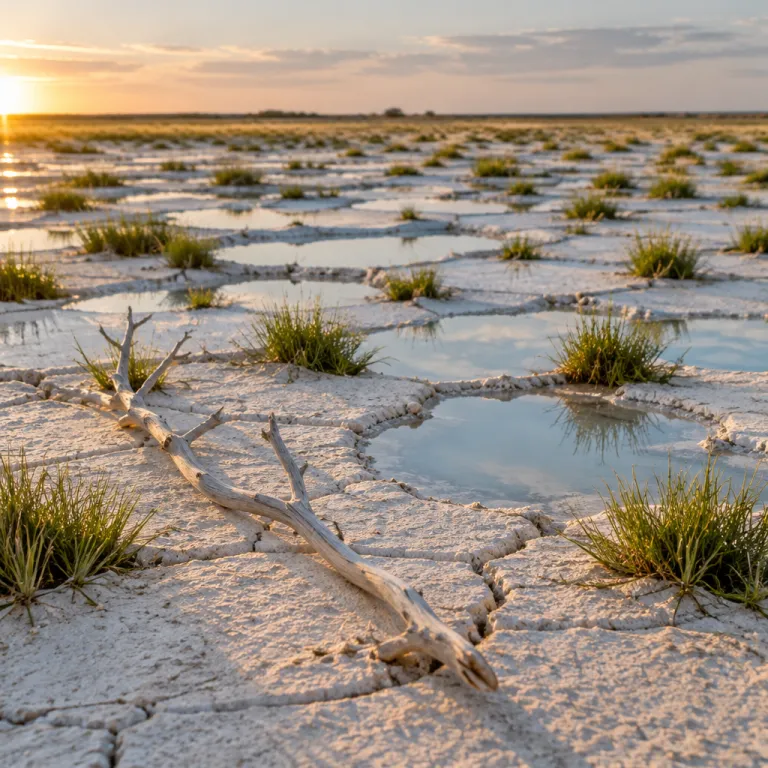
The scale of the Central Kalahari and why it feels different from the Delta
The Central Kalahari Game Reserve sits in the middle of Botswana and is one of the largest protected areas in Africa. This central wilderness is about space, silence and horizon rather than constant game around every bend, which makes a Central Kalahari safari in Botswana feel radically different from a water based Okavango Delta itinerary. For a person used to busy national parks in South Africa or a packed game reserve near Cape Town, the emptiness here can feel almost disorienting.
Across more than 50 000 square kilometres of desert grassland and fossil riverbeds, you may drive an hour on game drives without seeing another vehicle or even another camp. That scale is the luxury, because a lodge here usually controls an enormous private concession inside or bordering the reserve, so your safari feels like a private Africa with only your guide, your vehicle and the wildlife. When you compare this to a more classic national park such as Chobe National Park or Moremi Game Reserve, the Central Kalahari offers fewer animals per square kilometre but a far deeper sense of wilderness.
Most travellers first meet Botswana through the famous Okavango, and many assume the best time to travel is only when the Okavango Delta is in full flood. In reality, the Central Kalahari Game Reserve runs on a different rhythm, with its own best time for a desert safari that has nothing to do with water levels in the delta. A well planned Central Kalahari safari in Botswana often works best as the second chapter after a stay in one of the Okavango Delta camps, creating a powerful contrast between wetland and desert.
The green season turn: when the desert becomes a grass sea
For much of the year, the Kalahari desert looks like a pale, thirsty land, with salt pans shimmering and the air wavering above the sand. Then the first proper rains arrive over southern Africa and the Central Kalahari changes almost overnight, turning the fossil river valleys into a green corridor that pulls wildlife from across the reserve. This is the strange magic of a Central Kalahari safari in Botswana during the green season, when the desert suddenly feels like a hidden savanna.
Deception Valley and Tau Pan are the two names you will hear most often, because these central pans and valleys become magnets for game once the grass flushes. Herds of springbok, oryx and wildebeest move in, followed by cheetah that use the open ground and by the famous black maned Kalahari lions that patrol the pans with a slow, heavy stride. A good pan camp positioned near these areas can deliver some of the most dramatic game drives in Africa, even though you are technically in a desert national park rather than a classic riverine game reserve.
Photographers love this time because the light is clean, the skies are huge and the wildlife stands out against the short grass of the Kalahari game plains. If you are used to the papyrus channels of the Okavango Delta or the riverfront of Chobe National Park, the open country here will feel like a different planet. Before you book, read a detailed field guide to Okavango Delta camps such as Botswana’s finest water based safaris, then plan your Central Kalahari leg as a deliberate contrast in both landscape and experience.
Desert adapted wildlife, San culture and what this means for your stay
A Central Kalahari safari in Botswana is not about ticking off the Big Five in a hurry, because this is a low density, big sky desert where life has adapted to scarcity. Here you watch how oryx can go months without drinking, how bat eared foxes work the pans at dusk and how black backed jackals clean up after a lion kill on the salt pans. The wildlife experience is slower and more observational, which suits a person who values behaviour and ecology over a quick list of species.
Many of the best lodge operations in the Central Kalahari Game Reserve work closely with San communities, whose tracking skills are legendary across southern Africa. A guided walk with San trackers is often the most memorable part of a desert safari, as they read the ground for tiny signs of game and explain how people survived in this national park long before it was a formal reserve. When you combine this cultural depth with the stark beauty of the Kalahari desert, you understand why seasoned Africa hands rate this as one of the continent’s most rewarding safaris.
From a booking perspective, you should treat a Central Kalahari lodge more like an expedition camp than a classic safari lodge near a river. Distances are long, so fly in by light aircraft from Maun or from the Okavango Delta, and accept that game drives may cover many kilometres before you find wildlife. For a broader view of how to structure a Botswana itinerary that links the delta, Chobe National Park and the Kalahari, study a specialist guide such as this overview of luxury safari booking in Botswana before you lock in your dates.
Light, stars and photography: why the Central Kalahari flatters a camera
One of the quiet revelations of a Central Kalahari safari in Botswana is how kind the desert light is to both amateur and serious photographers. With almost no humidity and very little pollution, the air above the Kalahari desert acts like a natural filter, sharpening the edges of every acacia and every springbok on the horizon. The result is that even a person with a simple camera can come home with images that feel cinematic.
At sunrise, the salt pans glow with a soft pastel wash, while the silhouettes of oryx and ostrich stand out against the sky in a way you rarely see in a busier national park. By late afternoon, the long shadows on Deception Valley or Tau Pan create a stage where black maned lions and cheetah become the only actors, and your game drives feel like private theatre. Many lodges in this central reserve now offer dedicated photographic safaris, with guides who understand positioning, light angles and how to work with the vast open spaces of this part of Africa.
Night brings a different kind of spectacle, because the Central Kalahari sits far from any city in Botswana, South Africa or Namibia. Step away from the camp fire and you will see the Milky Way arching over the desert, with a clarity that makes stargazing feel almost three dimensional. If you are pairing the Kalahari with a visit to Victoria Falls, Chobe National Park or the Okavango Delta, consider keeping at least two nights here purely for photography and stars, as the best time for both often coincides with the clear skies that follow the rains.
How and when to go: pairing the Central Kalahari with the Delta and beyond
Planning a Central Kalahari safari in Botswana starts with one decision, which is whether you want the stark, dry desert or the green season transformation. For most travellers, the best time to visit the Central Kalahari Game Reserve is from about December to April, when the pans are green, the zebra and wildebeest move in and predators work the open ground. Outside this window, the desert safari becomes more about solitude, San culture and the meditative beauty of the Kalahari rather than big concentrations of game.
The classic pairing is to start with a water based safari in the Okavango Delta, then fly south into the Central Kalahari for three or four nights at a lodge near Deception Valley or Tau Pan. This gives you both the mokoro channels and lagoons of the Okavango Delta and the fossil riverbeds and salt pans of the Kalahari desert in a single Botswana journey. If you have more time, you can add Chobe National Park for riverfront elephants, or even extend to Victoria Falls and then down to Cape Town, creating a southern Africa circuit that moves from city to delta to desert.
For travellers who are already considering a Garden Route safari in South Africa, it is worth reading a refined planning guide such as how to choose a Garden Route safari lodge and then comparing that style of national park experience with the remoteness of the Central Kalahari. The key is to be honest about what you want from your safaris, because the Kalahari game experience is about quality of sightings rather than sheer volume. If you crave constant action and safaris big on checklists, you may be happier focusing on Moremi Game Reserve, the Okavango Delta and Chobe National Park, then saving the Kalahari for a future trip when you are ready for more space and silence.
Choosing the right Central Kalahari lodge or camp for a luxury stay
Luxury in the Central Kalahari looks different from luxury on the banks of the Zambezi or in a polished lodge near Cape Town. Here, a high end camp earns its rate not with marble bathrooms but with exceptional guiding, smartly designed tents that handle desert extremes and access to prime game areas such as Deception Valley, Tau Pan or the surrounding salt pans. When you evaluate options on a premium booking website, look beyond the pool and focus on the concession size, the guide team and the quality of vehicles for long game drives.
Some lodges sit inside the Central Kalahari Game Reserve itself, while others occupy private land on the northern or eastern fringes of the park, which can offer more flexibility for activities. A camp on a private game reserve bordering the national park may allow night drives and off road tracking of black maned lions or cheetah, which can significantly deepen your wildlife experience. In contrast, a lodge inside the national park gives you that pure, central desert feeling, with nothing but Kalahari game and sky in every direction.
For couples, the most rewarding stays usually combine at least three nights in the Central Kalahari with three or four nights in the Okavango Delta, either in a water based camp or a mixed habitat lodge that also offers classic game drives. This balance lets one person in the partnership lean into the drama of predator action on the pans, while the other enjoys the softer, more romantic side of Africa in the delta channels. When you read reviews, pay close attention to how guests describe the guiding, because in a landscape this vast, the right guide is the difference between a quiet drive and a life changing safari.
Managing expectations: who the Central Kalahari is really for
A Central Kalahari safari in Botswana rewards a certain type of traveller, and it is worth being candid about that before you book. If you are planning your first trip to Africa and dream of dense wildlife, short transfers and a quick hit of the Big Five, then the Central Kalahari Game Reserve may not be your best first stop. In that case, focus on Moremi Game Reserve, the Okavango Delta and Chobe National Park, then add the Kalahari desert on a second visit when you already understand how safaris work.
For returning guests who have already seen Kruger in South Africa, the Masai Mara in Kenya or the private reserves of Sabi Sand, the Central Kalahari offers something they rarely find elsewhere. Here, the luxury is the ability to sit with a single black maned lion for an hour without another vehicle in sight, or to watch a storm roll across the salt pans with nothing between you and the horizon. This is a safari for people who value atmosphere, light and silence as much as they value game density.
When you approach it with that mindset, the Central Kalahari becomes one of the most compelling national park experiences in southern Africa, precisely because it refuses to behave like a theme park. You accept that some game drives will be quiet, and that the best time for dramatic sightings may be compressed into a few golden hours after a storm. In return, you gain a relationship with a desert that changes your sense of scale, and you leave Botswana understanding that its magic lies not only in the Okavango Delta but also in the vast, central heart of the Kalahari.
Key figures for Central Kalahari and Botswana safaris
- The Central Kalahari Game Reserve covers about 52 800 square kilometres, making it one of the largest protected areas in Africa and significantly larger than many better known national parks such as Kruger in South Africa (source: Botswana Department of Wildlife and National Parks).
- Average annual rainfall in the Central Kalahari ranges from roughly 250 to 500 millimetres, with most rain falling between November and March, which defines the green season and the best time for the Kalahari game concentrations (source: Botswana Meteorological Services).
- Botswana maintains a low volume, high value tourism model, with fewer than 2 million international arrivals per year compared with more than 10 million in South Africa, which helps keep national parks such as the Central Kalahari and the Okavango Delta relatively uncrowded (source: UN World Tourism Organization).
- Chobe National Park holds an estimated 120 000 elephants, one of the highest densities in Africa, which is why many travellers pair Chobe and the Okavango Delta with the quieter Central Kalahari for a balanced Botswana safari (source: Elephants Without Borders).
- The Okavango Delta supports more than 1 000 plant species and over 400 bird species, creating a strong ecological contrast with the arid Central Kalahari desert and making the combined itinerary one of the most diverse safaris in southern Africa (source: UNESCO World Heritage Centre).
FAQ about Central Kalahari safaris in Botswana
Is the Central Kalahari worth visiting if I have already been to the Okavango Delta?
Yes, the Central Kalahari is worth visiting even if you know the Okavango Delta well, because it offers a completely different desert ecosystem, vast open spaces and a slower, more contemplative style of safari. Where the delta is about water channels, lush islands and dense wildlife, the Central Kalahari focuses on big skies, fossil river valleys and seasonal concentrations of game on the pans. Many experienced travellers say that combining the two gives the most complete picture of Botswana.
What is the best time of year for a Central Kalahari safari in Botswana?
The best time for a Central Kalahari safari in Botswana is generally during the green season from about December to April, when rains transform the desert, the pans flush with grass and large herds of antelope and zebra move in. This period also attracts predators such as cheetah and the black maned Kalahari lions, which use the open ground to hunt. Outside this window, the landscape is drier and sightings are more spread out, but the sense of solitude is even stronger.
How many nights should I spend in the Central Kalahari Game Reserve?
Most travellers should plan at least three nights in the Central Kalahari Game Reserve to justify the travel time and to allow for the natural ebb and flow of desert wildlife. With two full days of game drives, you increase your chances of seeing predators on the pans and of experiencing both clear skies and dramatic storms. If you are a keen photographer or a returning safari guest, four nights can be ideal.
Can I see the Big Five in the Central Kalahari?
The Central Kalahari is not a classic Big Five destination, because it does not have large populations of elephant, buffalo or rhino like Chobe National Park or some South African reserves. Instead, it is known for desert adapted species such as oryx, springbok, bat eared foxes, cheetah and the iconic black maned Kalahari lions. If the Big Five is essential for you, combine the Kalahari with the Okavango Delta, Moremi Game Reserve or a private reserve in South Africa.
How do I combine the Central Kalahari with Victoria Falls or Cape Town?
The most efficient way to combine the Central Kalahari with Victoria Falls or Cape Town is to use Maun or Kasane as your regional hub. A typical routing is to fly into Maun for the Okavango Delta, continue by light aircraft to a Central Kalahari lodge, then exit via Maun or Kasane for a connection to Victoria Falls or onward to Cape Town. Working with a specialist safari operator or a premium booking platform helps align flight schedules and lodge availability across these regions.