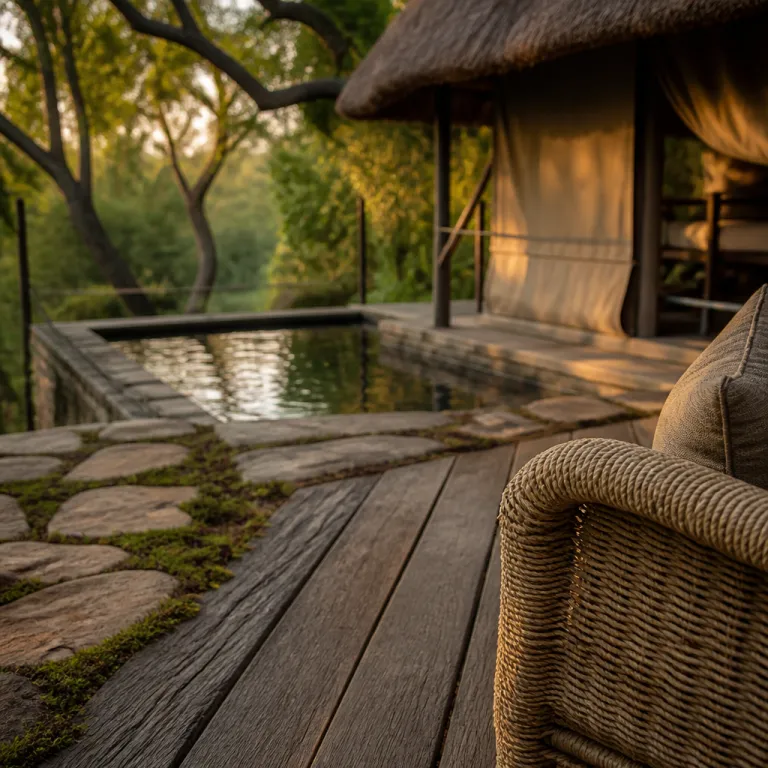
Why Kirkman’s Kamp stands out among South Africa’s safari lodges
Kirkman’s Kamp is a historic safari lodge set in the Sabi Sand Game Reserve of South Africa. This former homestead-style house overlooks the Sand River, giving every room a front-row seat to one of Africa’s most wildlife-rich corridors. The atmosphere feels like a private bush camp, yet service and comfort rival a refined country hotel.
The property sits within a private concession that forms part of the wider Sabi Sand Game Reserve and shares an unfenced boundary with Kruger National Park, so animals move freely between the two game areas. Because the Sabi Sand ecosystem concentrates water and grazing along the Sands River and the wider Sand River system, game viewing here is among the most reliable in southern Africa. Guests at this game lodge often comment that the lodge’s Sabi Sand location delivers sightings that many only expect on a once-in-a-lifetime safari.
The main lodge building preserves its 1920s character, while the 12 cottages provide contemporary comforts such as air-conditioned rooms and generous verandas. This balance of heritage and modernity is why Kirkman’s Kamp is often compared with newer properties like Tengile River Lodge or Narina Lodge, yet it retains a uniquely nostalgic charm. For travellers weighing different safari lodge options in South Africa, Kirkman’s Kamp offers a rare blend of history, intimacy, and access to exceptional game viewing.
Location in Sabi Sand Game Reserve and how it shapes your stay
The lodge lies in the southern sector of Sabi Sand, close to the Sand River and within easy flying access from both Johannesburg and Cape Town. This corner of the Sabi Sand Game Reserve is renowned for leopard sightings, and the guiding team at Kirkman’s Kamp uses open safari vehicles and field guides to track predators along the river and through the bush. Because the reserve borders Kruger National Park without fences, you benefit from the same wildlife density but with far fewer vehicles at each sighting.
Travellers often pair a stay at Kirkman’s Kamp with time in Cape Town or with another game lodge such as Lion Sands, creating a varied South Africa itinerary that balances city culture and wilderness. If you are planning a multi-stop journey that includes both a Sabi Sand safari lodge and a city break, it is worth reading about how to extend a business trip into a safari near Cape Town and other hubs, which helps you understand flight timings and transfer logistics. Some guests even combine Sabi Sand with destinations like Uganda or Zambia, using the lodge as the South Africa anchor in a broader Africa circuit that might also feature a river lodge on the Zambezi or a bush camp in the Luangwa.
The terrain around Kirkman’s Kamp mixes open grassland, riverine forest, and thicker bush, which means every game drive feels different. Morning drives often follow the Sands River and the wider Sand River to look for big cats returning from a night hunt, while afternoon safaris may explore deeper into the Sabi Sand interior for elephants and general plains game. On one winter afternoon, for example, a guide might follow fresh leopard tracks from the riverbank and find the cat draped over a marula branch as the sun sets. This variety, together with strict vehicle limits in the reserve, ensures that both first-time visitors and seasoned safari travellers find the experience at this lodge consistently rewarding.
Game viewing, Big Five encounters, and seasonal timing
Game viewing at Kirkman’s Kamp is structured around twice-daily drives in open safari vehicles, led by experienced guides and trackers. The lodge’s position in Sabi Sand, close to the Sand River, makes it particularly strong for leopard sightings and for observing interactions between predators and prey. According to the lodge’s own information, “Guests often see the Big Five, especially leopards.”
Because the Sabi Sand Game Reserve shares an unfenced boundary with Kruger National Park, wildlife moves naturally between the two game areas, which keeps sightings dynamic throughout the year. Dry winter months concentrate animals along the Sands River and other water sources, so many travellers choose this period for intense predator action and clear bush conditions. For a deeper understanding of why cold nights can sharpen sightings, you can consult a guide to a southern African winter safari that explains how temperature, vegetation, and water levels influence behaviour.
During the greener months, the bush thickens and the Sand River flows more strongly, creating lush backdrops for photography and excellent birding. Families often favour this time because the landscape feels softer, and young animals are frequently seen around the lodge and across the wider Sabi Sand terrain. Whether you visit in the dry or green season, the combination of expert guiding, limited vehicle numbers, and the lodge’s prime position in Sabi Sand ensures that guests enjoy a high ratio of quality sightings to time spent on drive.
Rooms, atmosphere, and how Kirkman’s Kamp compares with other lodges
The 12 cottages at Kirkman’s Kamp are arranged along a ridge, each room facing the Sand River with a private veranda. Interiors echo the original house with polished floors, classic furniture, and subtle references to the camp’s early safari history, yet modern comforts such as ceiling fans and well-appointed bathrooms keep the experience firmly in the luxury category. Public areas include a lounge, bar, and shaded terraces that look out over the bush and the river, creating natural gathering points between game drives.
When comparing Kirkman’s Kamp with newer properties like Tengile River Lodge or Chitwa Chitwa, the key difference lies in style rather than in the quality of game viewing. Tengile, set along the Sand River, offers a more contemporary aesthetic with larger suites, while Chitwa Chitwa combines a lakeside setting with bold design and a slightly more glamorous feel. Kirkman’s Kamp instead leans into its heritage, giving guests the sense of staying in a lived-in family home that has evolved into a refined safari lodge without losing its soul.
Travellers who prefer ultra-modern architecture may gravitate towards a camp such as Tengile or a river lodge elsewhere in South Africa, while those who value character often choose Kirkman’s Kamp as their primary game lodge. The property also compares favourably with Lion Sands and Narina Lodge in terms of guiding standards and access to the broader game reserve ecosystem, even though each sits on a different stretch of river or bush. For many repeat visitors to Sabi Sand, the combination of intimate scale, river views, and the relaxed yet polished atmosphere at this lodge makes it their preferred base in the Sabi Sand region.
Family friendly safaris, activities, and multi country combinations
Kirkman’s Kamp is explicitly family friendly, offering cottages that can accommodate parents and children together while still preserving privacy. Staff are used to tailoring safari activities to different ages, so a younger family member might enjoy a shorter drive or a bush walk near the lodge while adults head deeper into the reserve. The main house and its lawns provide safe spaces between activities, allowing children to relax, swim, or watch animals along the Sand River from a comfortable distance.
Guided game drives remain the core activity, but walking safaris, birding, and photographic sessions can be arranged for guests who want to deepen their connection with the bush. Because the lodge sits within Sabi Sand, where off-road driving is carefully managed, guides can position vehicles for excellent views without disturbing the animals, which is especially valuable for families keen on close yet ethical encounters. For those planning a broader Africa journey, it is common to combine a stay here with a river lodge in Zambia or a bush camp in Uganda or Zambia, using Kirkman’s Kamp as the South Africa component of a multi-country safari.
Some travellers also link Kirkman’s Kamp with properties such as Lion Sands or Narina Lodge to experience different sections of the greater Kruger National Park ecosystem. Others add time in Cape Town before or after their safari, balancing urban culture with days in the game reserve and nights under the southern stars. Whether you travel as a couple, a multi-generational family, or a small group of friends, the lodge’s scale and flexible activity planning make it easy to design a stay that suits each guest in terms of pace, comfort, and immersion.
Booking strategy, value for money, and how to choose your ideal lodge
Securing a stay at Kirkman’s Kamp requires planning, because the lodge has only 12 cottages and peak periods in Sabi Sand often book out months in advance. Rates are typically quoted per person per night and include accommodation, meals, and most safari activities, which simplifies budgeting for a multi-stop South Africa itinerary. When comparing prices with other properties such as Tengile River Lodge, Chitwa Chitwa, Lion Sands, or Narina Lodge, remember that location within the game reserve and the quality of guiding can influence overall value as much as room size or design.
Travellers who prioritise intense game viewing may choose to allocate more nights to a lodge in Sabi Sand or the wider Sabi Sand region, then add a shorter stay in another game lodge elsewhere in Africa. Those who want a broader perspective on different ecosystems might split time between Kirkman’s Kamp and a water-based camp in Botswana, using a specialist guide to Okavango Delta camps to understand how river-based safaris differ from the bush-focused experience in South Africa. For guests considering a longer Africa journey that includes Uganda or Zambia, it can be efficient to work with a tour operator familiar with flight routes between Kruger National Park, Entebbe, and Lusaka.
When choosing between Kirkman’s Kamp and other lodges, think carefully about what matters most to you beyond the headline safari. If you value a sense of history, a gracious main house, and views over the Sand River, this lodge will likely feel ideal, whereas travellers seeking ultra-contemporary suites might prefer Tengile or a different river lodge. Whatever your final choice, ensure that your selected camp or camps sit within a well-managed reserve, whether in Sabi Sand, the greater Kruger National Park area, or further afield in Uganda or Zambia, so that your investment supports both conservation and community benefits.
Key statistics and practical figures for Kirkman’s Kamp and Sabi Sand
- Kirkman’s Kamp has 12 cottages, which keeps guest numbers low and ensures a high guide-to-guest ratio for personalised game viewing (figure confirmed by the lodge’s official accommodation overview, current at the time of writing).
- The Sabi Sand Game Reserve covers roughly 65 000 hectares (about 160 600 acres), with Kirkman’s Kamp enjoying access to a substantial traversing area within this landscape (area data reported in Sabi Sand Game Reserve fact sheets and visitor information).
- Sabi Sand shares an unfenced boundary of approximately 50 kilometres with Kruger National Park, allowing free movement of wildlife and supporting Big Five sightings on both sides of the boundary (boundary length referenced by Sabi Sand and South African National Parks publications).
- Typical game drives at a Sabi Sand safari lodge last around three hours, with two drives per day, meaning a three-night stay can provide roughly 18 hours of dedicated game viewing time (industry-standard practice across many South African private reserves and lodge guidelines).
- Many premium lodges in Sabi Sand, including Kirkman’s Kamp, limit vehicles at a sighting to two or three, which significantly improves viewing quality compared with some busier national park areas (vehicle caps described in Sabi Sand Game Reserve conservation and visitor protocols).
FAQ: planning a stay at Kirkman’s Kamp and in Sabi Sand
What wildlife can be seen at Kirkman’s Kamp ?
Guests often see the Big Five, especially leopards. Beyond the Big Five, you can expect regular sightings of giraffe, zebra, various antelope species, and abundant birdlife along the Sand River and across the wider Sabi Sand Game Reserve.
Is Kirkman’s Kamp suitable for families with children ?
Yes, Kirkman’s Kamp is considered family friendly and offers cottages and activities designed for families. The main house, lawns, and pool area provide relaxed spaces between drives, and guides can adapt game drives or bush walks to suit different ages and comfort levels.
What amenities are available at the lodge ?
Amenities at Kirkman’s Kamp include a swimming pool, bar, lounge areas, and guided safaris in open vehicles. Guests also benefit from walking safaris, birding opportunities, and the services of experienced guides and trackers who focus on safe, ethical game viewing.
How many nights should I stay at Kirkman’s Kamp for a first safari ?
For a first safari in Sabi Sand, a stay of three to four nights at Kirkman’s Kamp works well. This duration allows enough game drives to experience different parts of the reserve, increases your chances of seeing the Big Five, and leaves time to relax at the lodge between activities.
How does Kirkman’s Kamp compare with other Sabi Sand lodges like Tengile or Chitwa Chitwa ?
Kirkman’s Kamp offers a more historic, homestead-style atmosphere compared with the contemporary design of Tengile River Lodge or the bold styling of Chitwa Chitwa. Game viewing quality is strong at all three, but Kirkman’s Kamp stands out for its heritage house, views over the Sand River, and a sense of understated elegance that appeals to travellers who appreciate character as much as luxury.