The quiet power of the dawn stop on safari day one
The first real taste of safari often arrives with that early pause in the bush, long before any formal bush breakfast has been laid out. Your guide will cut the engine, the morning air over Africa still cold enough for breath to show, and a small table appears beside the vehicle. This is where the rhythm of a safari day settles, and where many guests realise that the luxury is not only in fine dining back at camp but in how thoughtfully the team handles these small, movable bush meals.
On a well run day safari in the Masai Mara or the Serengeti, the dawn coffee stop is deliberately unfussy yet quietly choreographed. One person pours strong coffee from a steel flask, another offers rusks or still warm muffins, while your guide will scan the surrounding bush for any movement. These are the first shared moments of the day, when the light lifts over the national park and the conversation turns from city lives to lion tracks and the plan for the next game drive.
In the best African safaris, this pause is not an afterthought but a core part of the dining experience that shapes the whole safari bush narrative. You may be twenty minutes into a day Serengeti drive, or already deep into Ngorongoro Conservation Area, yet the feeling is the same. The bush dining rituals start here in the half light, long before any grand bush dinner or elaborate breakfast sundowner combination appears, and they quietly define how you will remember these days in Africa.
Bush breakfast in the open: theatre after the morning game drive
Once the first game drive of the morning ends, the real theatre begins with a full bush breakfast set in the open. A good camp will choose a clearing where the grass still shows where lions walked earlier in the day, then lay out linen, proper crockery and a compact field kitchen. This is where the phrase safari sundowner bush breakfast starts to make sense, because the same team that will later mix your sundowner now plates eggs while hornbills call from the nearest tree.
In the Masai Mara and across the wider mara ecosystem, properties Masai families have helped to build often excel at this kind of bush dining because they understand how important the setting is. You might sit under an acacia with the escarpment behind you, watching balloons drift while an experienced person from the lodge grills bacon and tomatoes to order. The best African camps treat bush meals as a form of fine dining in motion, with the same care for seasoning and timing that you would expect from a city restaurant, only here the kitchen is the bush itself.
Further south in the Serengeti Ngorongoro corridor, a bush breakfast might be served beside a seasonal river, with hippos grunting in the distance and your guide will quietly keep an eye on the tree line. The luxury is not in excess but in precision, from how the coffee stays hot to how the team clears every crumb so that no wildlife is attracted back to the site later in the day. When you assess a safari lodge online, ask how often they offer a full bush breakfast away from camp, because that answer tells you more about their bush dining philosophy than any menu description.
The sundowner ritual: how the day resets in the african bush
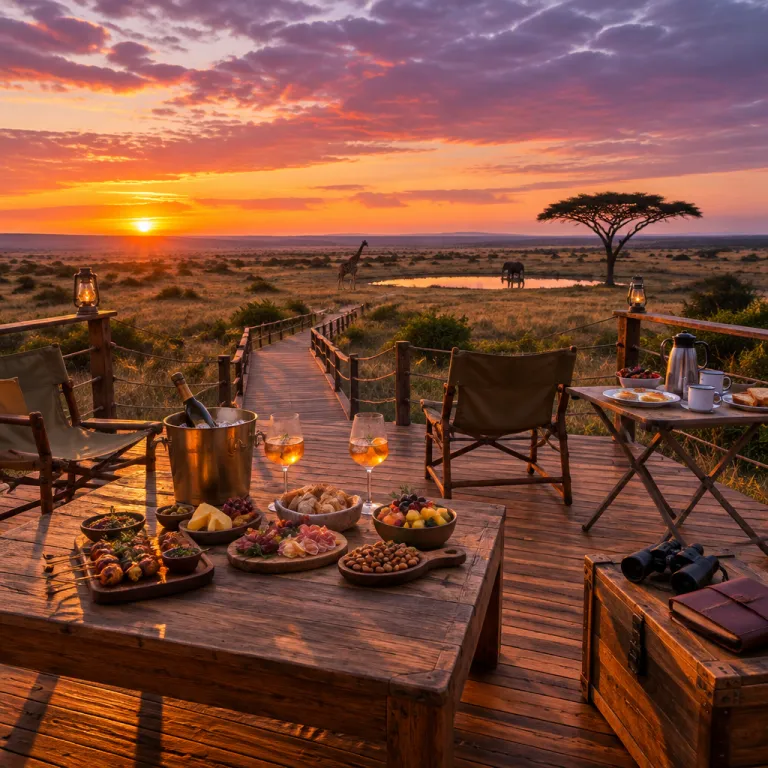
As the heat drops and the light softens, the vehicle stops again and the sundowner ritual begins, often becoming the most photographed part of any safari day. A good guide will choose a safe rise or riverbank with a clear view west, then the cool box opens and the bar appears with quiet efficiency. This is where the daily food theatre of a safari sundowner bush breakfast cycle comes full circle, because the same hands that served your morning coffee now pass you a perfectly mixed gin and tonic.
In the Serengeti, a classic day Serengeti pattern might see you leave camp after lunch, track cheetah for several hours, then pause for a sundowner as the sky turns copper over the plains. In Ngorongoro or during longer days Tanzania itineraries, the sundowner might happen on the crater rim, with the air cooler and the views more dramatic. Wherever you are, the best camps treat this as more than a drink stop, pairing small bites with the setting so that the dining bush element feels intentional rather than improvised.
Some lodges now pair the evening drink with a light bush dinner tasting plate, especially for couples who prefer a later, more formal meal back at camp. Others keep it simple with nuts, biltong and small canapés, saving the full gourmet dining experience for the main mess tent where chefs who once worked in city kitchens now cook in the bush. If you care about gastronomy, look for lodges that speak openly about their approach to gourmet dining in Africa’s wildest settings, because that usually signals equal respect for the quieter rituals of the breakfast sundowner and the last drink of the day.
The craft behind the scenes: how teams move a kitchen into the wild
The apparent spontaneity of a bush breakfast or a sunset drink hides a serious amount of planning, training and risk management. Before you arrive at the clearing, a mobile team from camp has already checked wind direction, animal activity and access routes, then moved equipment out in a support vehicle. In well run African safaris, nothing about bush meals is left to chance, because safety for every person present and respect for the environment come first.
In the Masai Mara and the wider masai mara conservancies, many properties Masai communities co own rely on guides who grew up in this landscape and understand how to read the bush. Your guide will know where elephants prefer to feed at that time of day, how close you can safely set up to a riverbank, and when to abandon a planned bush dining site because lions have moved in. The same applies in the Serengeti Ngorongoro region, where rangers and lodge teams coordinate closely with national park authorities to ensure that every bush breakfast, picnic lunch or bush dinner complies with conservation rules.
Behind the scenes, chefs and camp managers design menus that travel well, stay safe for hours and still feel like fine dining when plated in the open. Eggs are par cooked then finished on site, fresh fruit is washed and sealed at camp, and every trace of the dining bush setup is removed afterwards so that no wildlife is habituated to human food. When you read lodge descriptions, pay attention to how they talk about logistics, because a camp that takes the craft of mobile bush dining seriously usually delivers a more seamless safari sundowner bush breakfast experience across all your days in Africa.
How to read a lodge listing: questions that reveal the real food experience
When you scroll through a luxury safari listing, it is easy to be distracted by images of lantern lit bush dinner scenes and long wine lists. Those matter, but the daily reality of your safari bush routine will be shaped more by the small movable meals that frame each day. To understand how a property really operates, you need to ask specific questions about bush breakfast options, sundowner locations and how flexible the team is with timing.
Start with the basics and ask how often the camp offers a full bush breakfast away from the main mess area, and whether they can arrange a picnic lunch so that you can stay out on a longer day safari. Clarify if a guide will always accompany you during any bush dining setup, and how many days Tanzania style mobile meals they can realistically provide during a longer stay. Couples who value privacy should also ask whether the lodge can arrange a private breakfast sundowner combination for just two people, either near camp or during a more remote game drive.
Then move to detail and enquire about dietary needs, from vegetarian bush meals to gluten free options that still feel like fine dining rather than an afterthought. Ask how many guests share each vehicle on a typical safari day, because that affects how personal the dining experience feels when the cool box opens and the table appears. Finally, look for lodges that speak confidently about both their main kitchen and their mobile dining bush operations, since that balance usually signals a property that understands how the daily food theatre of a safari sundowner bush breakfast truly defines your time in the African bush.
FAQ
What is a typical safari sundowner and bush breakfast routine on a game drive day ?
On a classic safari day, you leave camp before sunrise and stop after an hour for a simple coffee break in the bush. After several more hours of game drive, the guide will bring you to a full bush breakfast setup with hot dishes and fresh fruit before returning to camp for rest and lunch. In the late afternoon you head out again, ending with a sundowner drink and snacks at a scenic spot before dinner back at camp.
Is a bush breakfast safe when wildlife is nearby in the national park ?
Reputable lodges only set up a bush breakfast or any bush meals in locations that guides have assessed as safe for that time of day. The team keeps vehicles close, maintains a clear view of the surrounding bush and will pack up immediately if animals approach too closely. Safety protocols are agreed with national park authorities, and guests are always accompanied by at least one experienced guide.
How should I dress for a bush breakfast or sundowner in africa ?
Mornings in the African bush can be cold, so wear layers that you can remove as the day warms. Neutral coloured clothing, closed shoes and a light jacket or fleece work well for both the early bush breakfast and the evening sundowner. A hat, sunglasses and sunscreen are essential, especially during longer days Tanzania style drives in open vehicles.
Can dietary requirements be accommodated during mobile bush dining experiences ?
Most high end camps in the Serengeti, Ngorongoro and Masai Mara can accommodate dietary needs during bush dining if informed in advance. Chefs plan menus so that vegetarian, vegan or gluten free options travel safely and still feel like part of the same dining experience as other guests. When booking, specify your requirements clearly and confirm that the camp can provide suitable alternatives for bush breakfast, picnic lunch and sundowner snacks.
How do I know if a lodge takes its mobile dining seriously when booking online ?
Look for detailed descriptions of bush breakfast setups, sundowner locations and picnic lunch options rather than only mentions of a formal bush dinner. Reviews that praise guides for thoughtful touches during a safari day, such as surprise coffee stops or private sundowner arrangements, are a strong indicator. You can also email the lodge or your agent with specific questions about how often they offer mobile meals away from camp and how flexible they are with timing.